
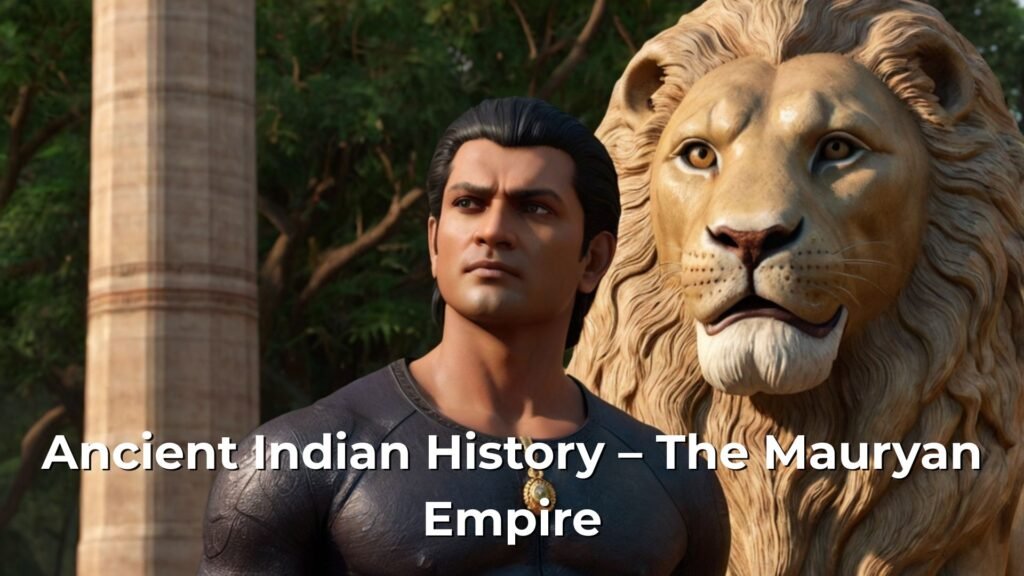
Ancient Indian History – The Mauryan Empire
The Mauryan Empire was the first and largest empire in ancient India. It was founded by Chandragupta Maurya in 322 BCE with the help of Chanakya (Kautilya). The Mauryan rule marked the beginning of a strong central government, economic prosperity and expansion across almost the whole Indian subcontinent. The most famous ruler of this empire was Emperor Ashoka, who later adopted Buddhism and spread its message of peace and non-violence across Asia. The Mauryan period (322 BCE – 185 BCE) is considered one of the most glorious eras in Indian history.
Important Questions and Answers about the Mauryan Empire
- Who founded the Mauryan Empire?
ANSWER: Chandragupta Maurya. - In which year was the Mauryan Empire founded?
ANSWER: 322 BCE. - Who helped Chandragupta Maurya to establish the Mauryan Empire?
ANSWER: Chanakya (Kautilya). - What was the capital of the Mauryan Empire?
ANSWER: Pataliputra. - From which dynasty did Chandragupta take over the throne?
ANSWER: The Nanda Dynasty. - Who was the last ruler of the Nanda dynasty?
ANSWER: Dhanananda. - Who was Chandragupta’s teacher and political advisor?
ANSWER: Chanakya. - What is the real name of Chanakya?
ANSWER: Vishnugupta. - Which famous book was written by Chanakya?
ANSWER: Arthashastra. - What is Arthashastra about?
ANSWER: It is a book on politics, administration, and economics. - Who was the first emperor of the Mauryan Empire?
ANSWER: Chandragupta Maurya. - Which Greek ruler invaded India before the Mauryan Empire was established?
ANSWER: Alexander the Great. - Who was Alexander’s general who made a treaty with Chandragupta?
ANSWER: Seleucus Nicator. - What was the result of the treaty between Chandragupta and Seleucus?
ANSWER: Chandragupta got territories and gave Seleucus 500 elephants. - Who was the Greek ambassador sent to Chandragupta’s court?
ANSWER: Megasthenes. - What book did Megasthenes write?
ANSWER: Indica. - What kind of information does Indica give us?
ANSWER: It describes the Mauryan administration, people, and society. - Who was Chandragupta’s son?
ANSWER: Bindusara. - Where did Chandragupta Maurya spend his last days?
ANSWER: In Shravanabelagola, Karnataka. - Which religion did Chandragupta follow at the end of his life?
ANSWER: Jainism. - Who succeeded Chandragupta Maurya?
ANSWER: His son Bindusara. - What was another name of Bindusara?
ANSWER: Amitraghata (Slayer of enemies). - Who was Bindusara’s father?
ANSWER: Chandragupta Maurya. - Who was Bindusara’s famous son?
ANSWER: Ashoka. - Which Greek ruler sent gifts to Bindusara?
ANSWER: Antiochus I. - What was the capital of Bindusara’s empire?
ANSWER: Pataliputra. - Who was the advisor of Bindusara?
ANSWER: Chanakya (Kautilya). - Which region did Bindusara not conquer?
ANSWER: Kalinga. - Who succeeded Bindusara?
ANSWER: Ashoka. - What type of ruler was Bindusara known as?
ANSWER: A strong but less famous ruler compared to Ashoka. - Who was the greatest ruler of the Mauryan Empire?
ANSWER: Ashoka. - What was Ashoka’s full title?
ANSWER: Devanampiya Piyadasi (Beloved of the Gods). - What was Ashoka’s father’s name?
ANSWER: Bindusara. - Who was Ashoka’s grandfather?
ANSWER: Chandragupta Maurya. - What was the capital city during Ashoka’s rule?
ANSWER: Pataliputra. - What was the turning point in Ashoka’s life?
ANSWER: The Kalinga War. - When did the Kalinga War take place?
ANSWER: Around 261 BCE. - What did Ashoka feel after the Kalinga War?
ANSWER: Deep sorrow and regret over bloodshed. - What religion did Ashoka adopt after the Kalinga War?
ANSWER: Buddhism. - What were Ashoka’s main principles after adopting Buddhism?
ANSWER: Truth, non-violence, compassion and tolerance. - What was Ashoka’s “Dhamma”?
ANSWER: A moral code of conduct for people to live peacefully. - What are Ashokan inscriptions?
ANSWER: Messages carved on rocks and pillars to spread his ideas. - In which script were Ashokan inscriptions written?
ANSWER: Brahmi script. - Who deciphered the Brahmi script?
ANSWER: James Prinsep. - In which language were most inscriptions written?
ANSWER: Prakrit. - Where are Ashoka’s famous rock edicts found?
ANSWER: Girnar, Dhauli, Kalsi, and Junagarh. - What animal symbol did Ashoka use?
ANSWER: The lion. - Which symbol from Ashoka’s pillar is now India’s national emblem?
ANSWER: The Lion Capital of Sarnath. - What is written below the Lion Capital?
ANSWER: “Satyameva Jayate” (Truth Alone Triumphs). - What is the meaning of Ashoka Chakra in the national flag?
ANSWER: It represents progress and righteousness. - What religion did Ashoka spread across Asia?
ANSWER: Buddhism. - What were the Buddhist councils?
ANSWER: Meetings of monks to discuss and preserve Buddha’s teachings. - Which Buddhist council was held during Ashoka’s reign?
ANSWER: The Third Buddhist Council. - Where was the Third Buddhist Council held?
ANSWER: At Pataliputra. - Who led the Third Buddhist Council?
ANSWER: Moggaliputta Tissa. - Which Buddhist text was compiled during Ashoka’s time?
ANSWER: Kathavatthu. - To which countries did Ashoka send Buddhist missionaries?
ANSWER: Sri Lanka, Burma, Nepal, and Afghanistan. - Who led the mission to Sri Lanka?
ANSWER: Mahendra (Ashoka’s son). - Who accompanied Mahendra to Sri Lanka?
ANSWER: Sanghamitra (Ashoka’s daughter). - Who was the king of Sri Lanka at that time?
ANSWER: King Devanampiya Tissa. - What kind of government did the Mauryas have?
ANSWER: Centralized monarchy. - Who was the head of the administration?
ANSWER: The Emperor. - What was the council of ministers called?
ANSWER: Mantriparishad. - Who looked after the army?
ANSWER: The Senapati (Commander-in-Chief). - Who looked after law and justice?
ANSWER: Rajjukas and Mahamatras. - What was the chief source of revenue?
ANSWER: Land tax. - Who collected taxes in villages?
ANSWER: Gopa. - What was the smallest unit of administration?
ANSWER: Village. - Who governed the village?
ANSWER: Gramika. - What was the main occupation of people?
ANSWER: Agriculture. - What was the economic base of the Mauryan Empire?
ANSWER: Agriculture. - What were the main crops grown?
ANSWER: Rice, wheat, barley, and sugarcane. - What type of trade was popular?
ANSWER: Both internal and foreign trade. - Which metals were used for coins?
ANSWER: Silver, copper, and lead. - What were the coins of Mauryan period called?
ANSWER: Punch-marked coins. - Which ports were important during Mauryan rule?
ANSWER: Tamralipti and Bharuch. - What did Indians export?
ANSWER: Spices, cotton, ivory, and pearls. - What did they import?
ANSWER: Horses and luxury goods. - Who controlled trade and taxes?
ANSWER: The state. - What was the main road built by the Mauryas?
ANSWER: The Royal Highway from Pataliputra to Taxila. - What type of art flourished during Mauryan times?
ANSWER: Stone sculpture and architecture. - What are the best examples of Mauryan art?
ANSWER: Ashoka’s Pillars. - Which is the most famous pillar?
ANSWER: The Sarnath Lion Capital. - What was used for Mauryan sculptures?
ANSWER: Chunar sandstone. - Name one famous stupa built by Ashoka.
ANSWER: Sanchi Stupa. - What were the caves of Barabar used for?
ANSWER: As places of meditation for monks. - Who gifted the Barabar caves?
ANSWER: Ashoka. - What style of art was popular?
ANSWER: Polished stone art. - What animal symbols appeared on pillars?
ANSWER: Lions, elephants, bulls, and horses. - What was special about Mauryan architecture?
ANSWER: It showed high skill and polish. - Who was the last Mauryan ruler?
ANSWER: Brihadratha. - Who killed Brihadratha?
ANSWER: Pushyamitra Sunga. - When did the Mauryan Empire end?
ANSWER: Around 185 BCE. - What dynasty succeeded the Mauryas?
ANSWER: The Sunga Dynasty. - What were the main reasons for the decline of the Mauryan Empire?
ANSWER: Weak successors, vast empire, and economic problems. - Did Ashoka’s non-violence policy weaken the empire?
ANSWER: Yes, partly it reduced military strength. - Which foreign power attacked during the late Mauryan period?
ANSWER: Bactrians (Greeks). - What was the duration of the Mauryan Empire?
ANSWER: Around 137 years. - Who wrote about the fall of the Mauryan Empire?
ANSWER: Greek historians and Indian texts. - What was the greatest achievement of the Mauryan Empire?
ANSWER: Political unity of almost the entire Indian subcontinent.
The Mauryan Empire marked the beginning of India’s political unity and administrative excellence. It brought peace, prosperity, and moral values under great rulers like Chandragupta Maurya and Ashoka the Great. The empire’s system of governance, economic organization, and contributions to art and Buddhism left a long-lasting legacy in Indian and world history. The Mauryan period remains a shining chapter of India’s ancient past and continues to inspire ideas of good leadership and humane governance.


