
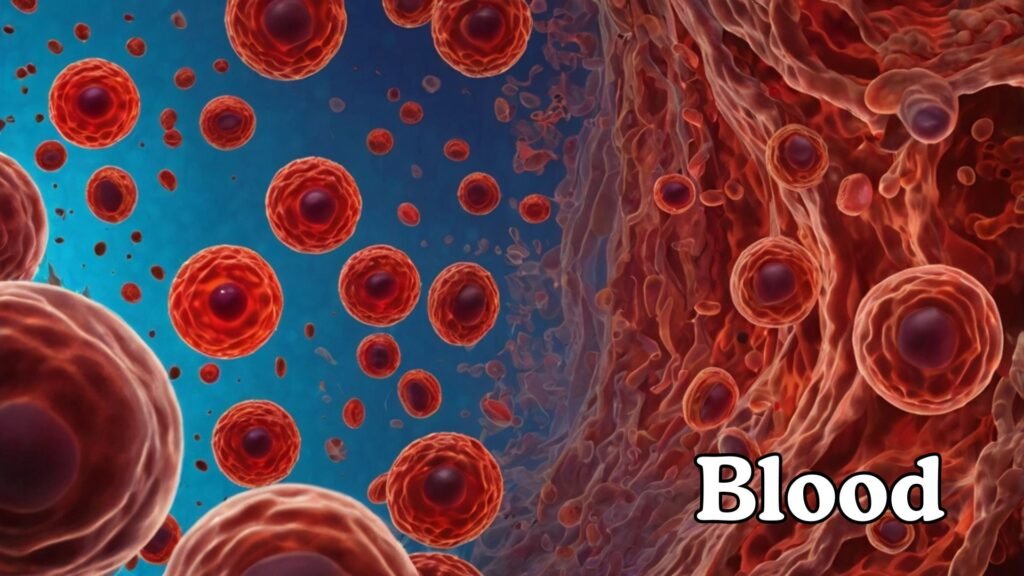
Blood
Blood is a vital fluid connective tissue that circulates throughout the human body. It transports oxygen, nutrients, hormones and waste materials, helping maintain life. Blood also plays important roles in immunity, temperature regulation, clotting and maintaining homeostasis. It consists mainly of plasma, red blood cells, white blood cells, and platelets. Understanding the composition, functions, diseases and physiology of blood is essential for competitive exams such as SSC, Railway, State PCS, Defence, Medical entrance and other government job tests.
- What is the color of human blood?
Answer: Red.
- What gives blood its red color?
Answer: Hemoglobin.
- What is the pH of human blood?
Answer: 7.35–7.45.
- What is the normal volume of blood in an adult?
Answer: 5–6 liters.
- Blood is a type of which tissue?
Answer: Connective tissue.
- What is the liquid part of blood called?
Answer: Plasma.
- Plasma is mainly composed of what?
Answer: Water (90–92%).
- Which protein helps in blood clotting?
Answer: Fibrinogen.
- Which protein in blood maintains osmotic pressure?
Answer: Albumin.
- Which protein helps in immunity?
Answer: Globulins.
- What cells carry oxygen in the blood?
Answer: Red Blood Cells (RBCs).
- Another name for RBC?
Answer: Erythrocytes.
- What is the lifespan of RBCs?
Answer: 120 days.
- RBCs are produced in which organ?
Answer: Bone marrow.
- Which hormone stimulates RBC formation?
Answer: Erythropoietin.
- RBCs are destroyed in which organ?
Answer: Spleen.
- Which organ is called the graveyard of RBCs?
Answer: Spleen.
- What is the main function of hemoglobin?
Answer: Transport oxygen.
- What is the normal hemoglobin value in males?
Answer: 13–18 g/dL.
- What is the normal hemoglobin value in females?
Answer: 12–16 g/dL.
- Which cells fight infections?
Answer: White Blood Cells (WBCs).
- Another name for WBC?
Answer: Leukocytes.
- What is the normal count of WBCs?
Answer: 4,000–11,000 per µL.
- Where are WBCs formed?
Answer: Bone marrow and lymphatic tissues.
- Which cells help in blood clotting?
Answer: Platelets.
- Another name for platelets?
Answer: Thrombocytes.
- What is the normal platelet count?
Answer: 1.5–4.5 lakh per µL.
- Which vitamin is essential for blood clotting?
Answer: Vitamin K.
- Which mineral is needed for clotting?
Answer: Calcium.
- What is the universal donor blood group?
Answer: O negative.
- What is the universal recipient blood group?
Answer: AB positive.
- Who discovered the ABO blood group system?
Answer: Karl Landsteiner.
- What is the Rh factor?
Answer: A protein on RBC surface.
- Rh incompatibility causes which disease in newborns?
Answer: Erythroblastosis fetalis.
- What is anemia?
Answer: Low hemoglobin.
- What causes sickle-cell anemia?
Answer: Genetic mutation in hemoglobin.
- What is leukemia?
Answer: Blood cancer.
- What is hemophilia?
Answer: Failure of clotting (genetic disorder).
- What is the normal clotting time?
Answer: 3–8 minutes.
- What is the normal bleeding time?
Answer: 1–3 minutes.
- Which blood cells are largest in size?
Answer: Monocytes.
- Smallest blood cells?
Answer: Platelets.
- Which WBCs are most abundant?
Answer: Neutrophils.
- Which WBCs increase in allergy?
Answer: Eosinophils.
- Which WBCs produce antibodies?
Answer: Lymphocytes.
- What is the main function of plasma?
Answer: Transport nutrients and waste.
- What is hematocrit?
Answer: Percentage of RBCs in blood.
- Normal hematocrit value?
Answer: 40–45%.
- Which vitamin deficiency causes anemia?
Answer: Vitamin B12.
- Which blood group has no antigens?
Answer: O.
- Which blood group has both antigens A and B?
Answer: AB.
- What is blood coagulation?
Answer: Blood clot formation.
- Which organ produces clotting factors?
Answer: Liver.
- What is serum?
Answer: Plasma without clotting factors.
- What is lymph?
Answer: Tissue fluid that enters lymph vessels.
- What is the main function of lymph?
Answer: Immunity and fat transport.
- Which blood cells kill parasites?
Answer: Eosinophils.
- Which blood cells release histamine?
Answer: Basophils.
- What is the normal ESR value?
Answer: 0–20 mm/hr.
- What is blood pressure?
Answer: Pressure of blood on arterial walls.
- Normal blood pressure?
Answer: 120/80 mmHg.
- What is plasma protein deficiency called?
Answer: Hypoproteinemia.
- What part of hemoglobin carries oxygen?
Answer: Iron (Fe²⁺).
- Which metal is found in hemoglobin?
Answer: Iron.
- Which metal is found in chlorophyll (for comparison)?
Answer: Magnesium.
- What is blood poisoning called?
Answer: Septicemia.
- What is the medical term for blood cancer?
Answer: Leukemia.
- Blood clot inside blood vessels is called?
Answer: Thrombus.
- Dislodged blood clot is called?
Answer: Embolus.
- Which organ filters blood?
Answer: Kidneys.
- Which organ destroys old WBCs?
Answer: Spleen.
- Which hormone increases blood sugar?
Answer: Glucagon.
- Insulin is produced by which organ?
Answer: Pancreas.
- What transports oxygen in blood besides hemoglobin?
Answer: Plasma (very small amount).
- What is the function of neutrophils?
Answer: Destroy bacteria.
- What is the function of monocytes?
Answer: Phagocytosis.
- What forms the "buffy coat" in blood?
Answer: WBCs and platelets.
- Which WBCs have a lobed nucleus?
Answer: Neutrophils.
- Which blood group is most common in India?
Answer: O positive.
- What is polycythemia?
Answer: Excess RBCs.
- What is leukopenia?
Answer: Low WBC count.
- What is thrombocytopenia?
Answer: Low platelet count.
- What is hemolysis?
Answer: Breaking down of RBCs.
- What is jaundice caused by?
Answer: Excess bilirubin.
- What is bilirubin?
Answer: Yellow pigment from RBC breakdown.
- What is blood transfusion?
Answer: Transfer of blood from one person to another.
- Who discovered the circulation of blood?
Answer: William Harvey.
- What is the function of arteries?
Answer: Carry blood away from the heart.
- Function of veins?
Answer: Carry blood to the heart.
- Which blood vessel has valves?
Answer: Veins.
- What are capillaries?
Answer: Thin blood vessels for exchange of materials.
- Which blood cells do not have a nucleus?
Answer: RBCs.
- Which blood cells are multinucleated?
Answer: None (WBCs have single or lobed nuclei).
- What is the danger of mismatched blood transfusion?
Answer: Agglutination (clumping) of blood.
- What is hematology?
Answer: Study of blood.
- Which is the rarest blood group?
Answer: AB negative.
- What is blood bank preservative?
Answer: Citrate.
- What is blood urea?
Answer: Waste product formed in liver.
- What is dialysis?
Answer: Artificial blood purification.
- What is hypovolemia?
Answer: Low blood volume.
Blood is an essential fluid that supports life by transporting oxygen, nutrients, and hormones while removing waste materials. It is vital for immunity, clotting, and maintaining homeostasis. Understanding the composition, functions, and disorders of blood helps students perform well in competitive exams. A strong command over blood physiology ensures better accuracy in biology, general science and medical sections of exams.
FAQs
- Why is blood important?
Blood carries oxygen, nutrients, waste materials and helps maintain immunity and body temperature.
- Why is human blood red?
Because of hemoglobin, a red-colored protein containing iron.
- What happens if blood group mismatches during transfusion?
It leads to agglutination, which can be life-threatening.
- Can blood be artificially made?
No, artificial blood cannot fully replace natural blood.
- How often can a person donate blood?
Every 3 months (for males) and every 4 months (for females).
- What is the safest blood group for donation?
O negative (universal donor).
- Which organs help in blood formation?
Bone marrow (main), liver and spleen (during fetal stage).
- What causes low hemoglobin?
Iron deficiency, vitamin B12 deficiency, and blood loss.
- What is the function of platelets?
They help in blood clotting.
- What organ purifies blood?
Kidneys.
Related Articles:


