
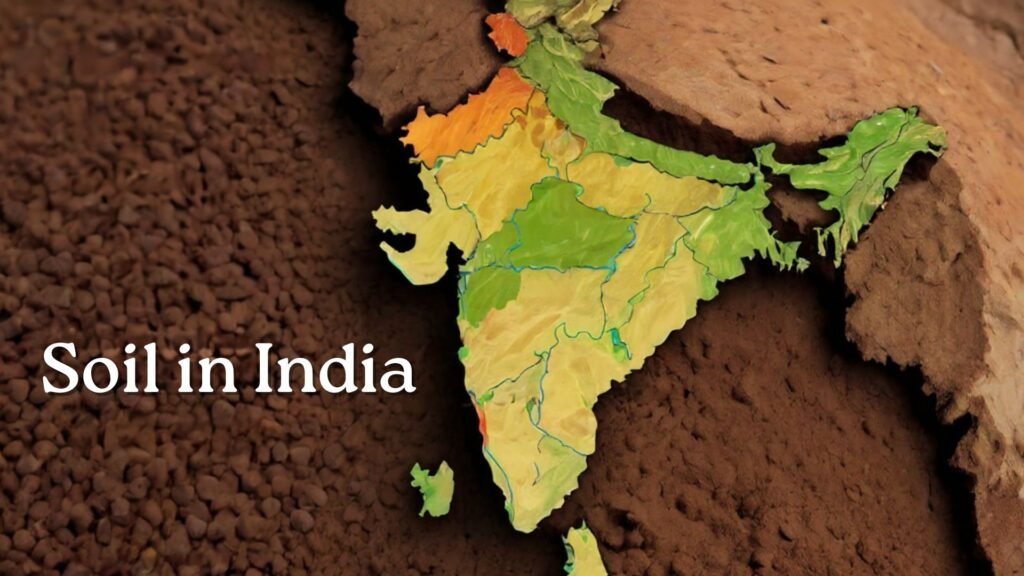
Soil in India
Soil is one of India’s most valuable natural resources, supporting agriculture, biodiversity and human livelihood. Due to India’s varied climate, geological structure and topography, the country has developed a wide range of soil types such as alluvial, black, red, laterite, desert and mountain soils. These soils differ in colour, texture, fertility and cropping potential. Understanding the characteristics, distribution and importance of soil helps us improve farming practices, manage natural resources and ensure food security for a growing population. Soil study is also crucial for competitive exams like UPSC, SSC, State PSC and Railway exams.
- What is soil?
Soil is the uppermost layer of the Earth where plants grow, made of minerals, organic matter, water, and air.
- What is the main factor responsible for soil formation?
Weathering of rocks.
- What is pedology?
The scientific study of soil.
- What is the parent material of soil?
The original rock from which soil is formed.
- Which soil covers the largest area in India?
Alluvial soil.
- Which crop grows best in black soil?
Cotton.
- What is another name for black soil?
Regur soil.
- Which soil is formed due to volcanic activity?
Black soil.
- Which soil is most suitable for rice cultivation?
Alluvial soil.
- Which soil is rich in iron oxide?
Red soil.
- Which soil is most infertile?
Desert soil.
- Which soil is found in the Himalayan region?
Mountain soil.
- Which soil contains kankar nodules?
Alluvial soil (older alluvium).
- What are the two types of alluvial soil?
Bangar and Khadar.
- Which alluvial soil is older?
Bangar.
- Which alluvial soil is more fertile?
Khadar.
- Which soil is red due to iron content?
Red soil.
- In which region is red soil mainly found?
Tamil Nadu, Karnataka, Odisha and Andhra Pradesh.
- Which soil becomes sticky when wet and hard when dry?
Black soil.
- Which soil is rich in humus?
Forest soil.
- Which soil is suitable for tea and coffee cultivation?
Laterite soil.
- Which soil is formed in areas of high rainfall?
Laterite soil.
- Which soil is poor in nitrogen and phosphorus?
Red soil.
- Which soil is found in Rajasthan and parts of Haryana?
Desert soil.
- Which soil needs irrigation for cultivation?
Desert soil.
- What is soil erosion?
The removal of top soil by wind or water.
- What is the main cause of soil erosion?
- What is contour ploughing?
Ploughing along the contour lines to prevent soil erosion.
- What is terrace farming?
Cutting steps on hill slopes to reduce soil erosion.
- What is laterisation?
The process of leaching in heavy rainfall areas that forms laterite soil.
- Which soil is suitable for sugarcane cultivation?
Alluvial soil.
- Which soil is sandy and saline?
Desert soil.
- What is the colour of mountain soil?
It varies from brown to dark brown.
- Which soil is found in Meghalaya?
Laterite and forest soils.
- What is soil conservation?
Protecting soil from erosion and degradation.
- Which soil contains calcium carbonate?
Alluvial soil (Bangar type).
- Which soil is heavy and clayey?
Black soil.
- Which soil is best for tobacco?
Black soil.
- Which soil is acidic in nature?
Laterite soil.
- Which soil has the highest water retention capacity?
Black soil.
- Which soil has low water retention?
Desert soil.
- Which soil supports millet and barley cultivation?
Desert soil.
- Which soil is used for cashew nut cultivation?
Laterite soil.
- Which soil is formed from igneous rocks?
Black soil.
- Where is laterite soil found?
Western Ghats, Eastern Ghats and Meghalaya plateau.
- Which soil is highly porous?
Red soil.
- Which soil is found in flood plains?
Alluvial soil.
- Which soil is suitable for groundnut cultivation?
Red soil.
- What is leaching?
Washing away of nutrients from the soil by water.
- Which soil is mostly deficient in nitrogen?
Alluvial soil.
- Which soil is found in Uttar Pradesh and Bihar?
Alluvial soil.
- Which soil is good for jute cultivation?
Alluvial soil.
- Which soil is fertile due to periodic flooding?
Khadar alluvial soil.
- Which soil develops cracks during summer?
Black soil.
- Which soil is good for wheat?
Alluvial soil.
- Which soil contains alluvial deposits brought by rivers?
Alluvial soil.
- Which soil is alkaline in nature?
Desert soil.
- Which soil is good for pulses?
Red soil.
- Which soil is found in Ladakh?
Mountain soil.
- Which soil is suitable for plantation crops?
Laterite soil.
- What is humus?
Organic matter in soil.
- Which soil lacks humus?
Desert soil.
- Which soil is found in Deccan Plateau?
Black and red soils.
- Which soil is known for self-ploughing?
Black soil.
- Which soil is found along the coastal plains?
Alluvial and laterite soils.
- Which soil type supports date palm cultivation?
Desert soil.
- Which soil has high lime content?
Black soil.
- Which soil develops due to river sedimentation?
Alluvial soil.
- Which soil is reddish because of oxidation?
Red soil.
- Which soil is suited for cotton and sugarcane both?
Black soil.
- Which soil is ideal for maize?
Alluvial soil.
- What is soil fertility?
The ability of soil to support plant growth.
- Which soil becomes laterite when strongly leached?
Red soil.
- Which soil is formed in dry areas with little rainfall?
Desert soil.
- Which soil needs frequent manuring?
Red soil.
- Which soil is found in Kerala?
Laterite soil.
- Which soil supports tea in Assam?
Alluvial and laterite soils.
- Which soil is also called ‘residual soil’?
Black soil.
- Which soil is found in Punjab and Haryana?
Alluvial soil.
- Which soil contains quartz grains?
Desert soil.
- Which soil needs lime to improve fertility?
Laterite soil.
- What is sheet erosion?
Removal of a thin layer of soil.
- What is gully erosion?
Deep channels formed by running water.
- Which soil is vulnerable to erosion?
Red soil.
- Which soil is majorly found in Maharashtra?
Black soil.
- Which soil is rich in potash?
Alluvial soil.
- Which soil is suitable for horticulture?
Red soil.
- Which soil is poor in humus and organic matter?
Red soil.
- What is saline soil?
Soil with high salt content.
- In which state is desert soil prominent?
Rajasthan.
- Which soil supports bajra cultivation?
Desert soil.
- Which soil expands when wet and CONTRACTS when dry?
Black soil.
- Which soil is found in Chhattisgarh?
Red and laterite soils.
- Which soil is most fertile in India?
Alluvial soil.
- Which soil is formed due to decomposition of forest leaves?
Forest soil.
- Which soil supports rubber cultivation?
Laterite soil.
- Which soil is extremely weathered?
Laterite soil.
- Which soil is more common in drought areas?
Black soil.
- Which soil is most associated with river valleys?
Alluvial soil.
- Which soil is used for saffron cultivation?
Mountain soil (Kashmir region).
Soil forms the foundation of India’s agriculture, economy and ecological balance. With diverse soils spread across different regions, India supports a wide range of crops and vegetation. Proper soil conservation, sustainable farming practices, and awareness about soil types can help maintain fertility and ensure long-term food security. Understanding soil is essential for environmental protection and responsible agricultural development.
FAQs
- Why is soil important in India?
Because over 50% of India’s population depends on agriculture, which requires fertile soil.
- Which soil is best for cotton?
Black soil.
- Why is red soil red?
Due to the presence of iron oxide.
- Which soil is most fertile?
Alluvial soil.
- Why do black soils crack in summer?
Because they shrink when dry due to high clay content.
- Which soil is common in Rajasthan?
Desert soil.
- Which soil supports coffee plantations?
Laterite soil.
- What reduces soil fertility?
Soil erosion and overuse of chemical fertilizers.
- How can soil erosion be reduced?
By afforestation, contour ploughing, and terrace farming.
- Which soil is good for growing cereals?
Alluvial soil.
Related Articles:


